

Modern medicine can accomplish extraordinary things. It can diagnose disease, repair injuries, relieve pain, treat mental illness, and extend life. Yet many people leave medical appointments with an unresolved sense that something essential has gone unaddressed.
They may receive a diagnosis, a prescription, or a treatment plan, but still ask deeper questions: Why am I suffering? How do I live with what cannot be cured? What do I do with fear, guilt, resentment, grief, or the loss of control? Can healing involve more than symptoms?
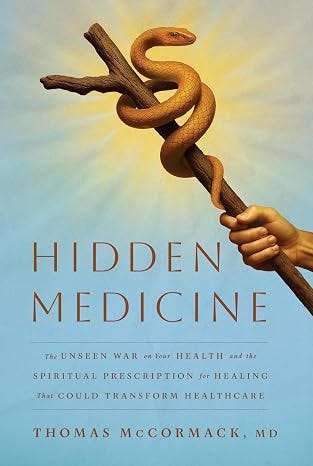
Thomas McCormack, M.D., addresses these questions in Hidden Medicine. A psychiatrist with nearly three decades of clinical experience, McCormack argues that healthcare often neglects the spiritual dimension of human beings. His book calls readers and healthcare providers to consider body, mind, and spirit together rather than treating them as unrelated parts.
This review contains an affiliate link. If you buy through it, I may earn a small commission at no extra cost to you.
This is a bold and sometimes provocative book. It will not appeal equally to every reader, especially those looking for a conventional medical self-help book. But for Christians who believe that human beings are both embodied and spiritual creatures, Hidden Medicine raises questions worth taking seriously.
What the Book Argues
The central claim of Hidden Medicine is that lasting healing often requires more than medical and psychological intervention. McCormack does not dismiss science or suggest that prayer should replace professional care. Instead, he argues that medicine is incomplete when it ignores the spiritual struggles that can shape a person’s health, hope, relationships, and capacity to endure illness.
To describe his approach, McCormack introduces the term Ruachiatry, combining the Hebrew word ruach, often translated “spirit” or “breath,” with the language of medical treatment. He presents this as a 12-step framework intended to integrate medical care, spiritual reflection, responsibility, reconciliation, forgiveness, prayer, and community.
The book is written for people who have tried many solutions and remain stuck in physical, emotional, or spiritual pain. McCormack draws on clinical cases, medical observations, personal experience, and practical exercises. His tone is direct and urgent. He wants readers to see that illness can involve more than biology, even while biology matters profoundly.
That conviction is not foreign to Christian faith.
Scripture portrays human beings as integrated creatures. God formed Adam from dust and breathed into him “the breath of life” (Genesis 2:7, ESV). The body matters. The inner life matters. Relationships matter. Worship matters. Sin and suffering affect the whole person.
Jesus often ministered this way. He healed bodies, forgave sins, restored people to community, confronted fear, and called people into faith. He did not reduce human beings to a diagnosis.
A Needed Challenge to Reductionism
One of the book’s strengths is its resistance to reductionism.
Modern life often divides people into categories. A physician treats the body. A therapist addresses the mind. A pastor cares for the soul. A family carries the daily burden. Each role can be valuable. But real human suffering does not arrive in neatly separated compartments.
A person struggling with chronic pain may also be carrying grief. Someone with anxiety may be facing loneliness, guilt, fear of death, or a fractured relationship. A patient recovering from addiction may need medical treatment, counseling, accountability, prayer, friendship, work, and a renewed sense of purpose.
McCormack’s insistence that spiritual questions belong in serious conversations about healing is therefore welcome.
The Psalms give language to this whole-person reality. David asks, “Why are you cast down, O my soul, and why are you in turmoil within me?” (Psalm 42:5, ESV). He does not deny his distress. He brings it before God.
Likewise, Paul writes that “we are afflicted in every way, but not crushed; perplexed, but not driven to despair” (2 Corinthians 4:8, ESV). Christian hope does not deny suffering. It gives suffering a place to go.
For readers who have felt unseen by approaches that treat illness only as a biological malfunction or psychological problem, Hidden Medicine may offer a meaningful corrective. It reminds us that healing can involve confession, forgiveness, surrender, truthful self-examination, reconciliation, and a renewed relationship with God.
The Ruachiatry Framework
McCormack’s proposed 12-step approach is the book’s distinctive contribution. It encourages readers to face powerlessness honestly, search for truth, accept responsibility, pursue reconciliation where possible, develop spiritual practices, and seek help rather than suffering in isolation.
Several of these themes will feel familiar to Christians.
The admission of limitation is central to faith. Human beings are not self-sufficient. We need God, community, wisdom, and often professional help.
The call to forgiveness is also deeply biblical. Jesus teaches his followers to pray, “forgive us our debts, as we also have forgiven our debtors” (Matthew 6:12, ESV). Forgiveness does not erase consequences or require someone to remain in an unsafe relationship. But bitterness can imprison the heart, and the work of forgiveness can be part of spiritual healing.
The emphasis on reconciliation also deserves attention. Zacchaeus’s encounter with Jesus produced concrete restitution: “If I have defrauded anyone of anything, I restore it fourfold” (Luke 19:8, ESV). Healing sometimes involves truthfully facing harm we have done and, where possible, making things right.
McCormack also highlights prayer, meditation, Scripture, and community. These are not quick cures or techniques for manipulating God. They are practices through which people learn to receive grace, endure suffering, tell the truth, and live with hope.
Important Pastoral Cautions
The book’s central concern is valuable, but Christian readers should approach some of its language carefully.
Spiritual care should complement, not replace, qualified medical and mental-health treatment. A person with depression may need counseling, medication, support, rest, and medical assessment. A person with diabetes needs appropriate medical care. A person experiencing psychosis, suicidal thoughts, abuse, or addiction needs immediate professional and community support.
Christians should never tell a suffering person that illness proves weak faith, hidden sin, demonic activity, or spiritual failure. Jesus explicitly rejected simplistic connections between personal sin and suffering. When asked about a man born blind, he replied, “It was not that this man sinned, or his parents” (John 9:3, ESV).
Nor should forgiveness be weaponized. A survivor of abuse can forgive while maintaining distance, pursuing justice, and protecting themselves from further harm. Reconciliation requires repentance, truth, safety, and, where possible, mutual participation.
These cautions do not undo McCormack’s argument. They help place it within a wiser and more compassionate Christian understanding of healing.
Why This Book Matters
Hidden Medicine matters because many people are not looking merely for symptom management. They are searching for wholeness.
They want help with fear and fatigue, but also with meaning. They want relief from pain, but also hope in the face of mortality. They want better habits, but also a life that can sustain suffering without collapsing into despair.
Christian faith does not promise that every illness will be cured in this life. Paul prayed repeatedly for his “thorn” to be removed, but God answered, “My grace is sufficient for you” (2 Corinthians 12:9, ESV).
That promise is not a dismissal of pain. It is the assurance that suffering does not have the final word.
The Christian vision of healing is ultimately larger than symptom relief. It includes restored relationship with God, growing freedom from sin, renewed love for others, strength to endure, and the final resurrection of the body.
McCormack’s book encourages readers to take this wider vision seriously. It asks medical professionals to consider the spiritual lives of their patients and invites readers to consider whether unresolved spiritual wounds may be shaping their wellbeing.
Verdict
Hidden Medicine is an ambitious and challenging book for readers who want to think beyond the usual boundaries of healthcare. McCormack’s emphasis on the spiritual dimensions of healing offers an important correction to approaches that treat human beings as bodies or minds alone.
Its 12-step Ruachiatry framework will be especially useful to readers open to a structured path of reflection, surrender, accountability, reconciliation, and spiritual practice. Christians will benefit most when they read it alongside sound medical care, wise pastoral counsel, and the biblical conviction that God meets people in suffering without blaming them for it.
Recommended for Christians, caregivers, pastors, counselors, healthcare professionals, and anyone seeking a more integrated understanding of health, suffering, and hope.
~ Sunny