

For writers, social media is often a strange mixture of opportunity and exhaustion.
It can help an author meet readers, share ideas, build community, promote a book, invite people into a newsletter, and establish a recognizable voice. It can also become a source of distraction, comparison, anxiety, wasted time, and pressure to post constantly without knowing whether any of it is helping.
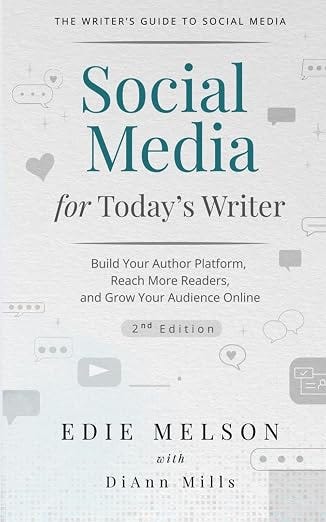
Edie Melson’s Social Media for Today’s Writer enters that tension with a practical and reassuring message: writers do not need to be everywhere, imitate everyone, or surrender their voice to an algorithm. They need a clear purpose, a workable plan, and consistent habits that create genuine connection.
This updated second edition is especially timely because social media has changed rapidly, and artificial intelligence has added both new possibilities and new questions for writers. The book offers guidance on platforms, audience building, online safety, content strategy, and the responsible use of AI. The first edition was previously published with DiAnn Mills, while this revised edition reflects Melson’s updated approach to the current digital landscape.
Social Media as Connection
The book’s greatest strength is its insistence that social media is not fundamentally about self-promotion. It is about connection.
That may sound obvious, but many writers approach online platforms as though they are billboards. They post announcements, links, cover images, and sales messages, then wonder why readers do not respond.
Melson encourages a different approach. Writers should use social media to become more accessible, helpful, and human. Readers are more likely to pay attention when they sense that an author is interested in conversation, not merely visibility.
This is particularly helpful for Christian writers.
A Christian presence online should not be built on constant self-advertisement, controversy, or the performance of spiritual certainty. It should reflect truthfulness, generosity, wisdom, and real interest in others.
Paul writes:
“Let your speech always be gracious, seasoned with salt, so that you may know how you ought to answer each person.”
Colossians 4:6, ESV
That principle applies to posts, comments, messages, captions, newsletters, and replies. A writer’s online presence does not need to be polished into perfection. But it should be shaped by grace.
Melson repeatedly guides writers away from trying to “go viral” and toward building trust. That is wise. A viral post may bring attention for a day. A trustworthy voice can build a community over years.
Start With Purpose
One of the most useful themes in the book is the need for clarity before activity.
Writers often begin using social media because they feel they are supposed to. They create accounts, follow advice from many experts, post inconsistently, and eventually become discouraged.
Melson encourages writers to begin with basic questions:
Who are you trying to reach?
What do you want readers to know about your work?
Which platform best fits your strengths and audience?
How much time can you realistically give to social media?
What kind of conversation do you want to create?
These are simple questions, but they prevent a great deal of wasted energy.
For example, a Substack writer who publishes reflective essays on faith and culture may not need to spend hours making short-form dance videos or chasing every trend. A better strategy might be to focus on Substack Notes, email, Facebook, Instagram, or Pinterest, depending on where their intended readers already gather.
A novelist may use social media differently than a Bible teacher. A nonfiction writer may share research, practical insights, or excerpts. A devotional writer may offer brief reflections, Scripture, and questions that invite readers to respond.
There is no universal formula. Melson’s practical counsel helps writers develop a plan that fits their voice, goals, and available time.
Social Media Without Losing Your Voice
The book also offers a healthy perspective on authenticity.
Writers often feel pressure to develop an online personality that is louder, trendier, more provocative, or more polished than they really are. They may begin comparing their audience size, engagement numbers, and book sales to writers whose platforms appear larger or faster-growing.
Melson pushes against this fear-driven approach. She encourages writers to let technology support their voice rather than replace it.
That advice is increasingly important in the age of AI.
Artificial intelligence can help writers brainstorm content ideas, repurpose a long article into shorter posts, develop a posting calendar, refine keywords, identify possible reader questions, and create early drafts. It can save time and reduce the burden of staring at a blank screen.
But it cannot replace a writer’s calling, judgment, spiritual discernment, or lived experience.
A tool can help organize a message. It cannot create the message God has placed in someone’s heart.
For Christian writers especially, the goal should not be merely more content. It should be faithful content. AI may help with process, but the writer must remain responsible for truth, tone, accuracy, and originality.
Melson’s counsel can be summarized simply: use technology as an assistant, not as a substitute for your voice.
This review contains an Amazon affiliate link. If you buy Social Media for Today’s Writer through the link below, I may earn a small commission at no extra cost to you.
Get Social Media for Today’s Writer on Amazon
Practical Help for Real Writers
Social Media for Today’s Writer is not a theory-heavy marketing book. It is a guide designed for people who need help getting started or getting unstuck.
Melson covers the purpose of social media, profiles and author pages, types of updates, conversations, platform etiquette, online safety, scams, algorithms, content planning, building an online library, and methods for streamlining social-media work. The book also includes practical exercises to help readers apply what they are learning.
The book’s practical tone is one of its strongest features.
Many writers do not need another lecture about the importance of “building a platform.” They already know that. What they need is a manageable path forward.
For example, a writer might begin with a simple weekly rhythm:
Publish one thoughtful newsletter or blog post.
Share one short excerpt or key idea from it.
Ask one meaningful question that invites conversation.
Respond to comments with attention and kindness.
Share another writer’s useful work.
Review what readers responded to, without becoming controlled by numbers.
This is slower than chasing daily trends, but it is more sustainable.
Social media should serve the writing life, not consume it.
A writer who spends every available hour online may build an audience but lose the time and attention required to create meaningful work. The goal is not to become a full-time content machine. The goal is to connect with readers while remaining faithful to the work of writing.
The Fear Beneath the Screen
Melson understands that fear often sits beneath social-media reluctance.
Some writers fear being ignored. Others fear criticism, mistakes, trolls, scams, or misunderstanding. Some feel overwhelmed by technology. Others dislike self-promotion and worry that sharing their work is prideful.
The book speaks helpfully to these concerns.
There is a difference between self-promotion and stewardship. A writer who has worked carefully on a book, essay, devotional, or story is not necessarily being prideful by letting people know it exists. If the work can serve readers, sharing it can be an act of service.
Jesus said:
“You are the light of the world. A city set on a hill cannot be hidden.”
Matthew 5:14, ESV
This verse is not a marketing slogan. It is a call to visible faithfulness. Still, it reminds Christian writers that hiding every gift out of fear is not humility.
The right posture is neither self-exaltation nor self-erasure. It is faithful stewardship.
Write honestly. Share clearly. Serve readers. Leave the results to God.
A Wise Word About Boundaries
The book also recognizes that online engagement requires boundaries.
Not every comment deserves a response. Not every debate needs to be joined. Not every critic needs to be persuaded. Writers need safeguards around their time, privacy, mental health, and relationships.
This is especially important for Christian writers who address faith, culture, politics, or controversial issues. Digital platforms reward conflict. Outrage often travels faster than wisdom. But a writer does not need to become reactive to remain relevant.
James writes:
“Let every person be quick to hear, slow to speak, slow to anger.”
James 1:19, ESV
That is good counsel for every writer with an internet connection.
A faithful online presence may sometimes require silence. It may require stepping away from an argument, refusing to answer an insulting message, or taking a Sabbath from screens.
Melson’s emphasis on strategy and efficiency helps writers see that social media should be managed with intention. It is a tool, not a master.
Who Should Read It?
This book is well suited for writers at almost any stage.
New writers will appreciate its plain language and step-by-step approach. More experienced writers will benefit from its updated attention to AI, changing platforms, content planning, and online safety.
It is particularly useful for authors, bloggers, Substack writers, speakers, ministry leaders, and creative professionals who want to reach readers without sacrificing their time, voice, or values.
Christian writers may find the book especially helpful because it offers a sensible framework for online presence that fits a commitment to authenticity, service, and wise communication.
Verdict
Social Media for Today’s Writer is a practical, encouraging, and timely guide for writers trying to build meaningful reader connections in a fast-changing digital world.
Edie Melson does not promise overnight growth or a guaranteed formula for success. Instead, she offers something better: a sustainable approach grounded in purpose, consistency, connection, and wise use of available tools.
For writers who feel overwhelmed by social media, unsure where to begin, or weary of trying to keep up with every new platform, this book offers a clear path forward.
Use social media with intention. Let technology support your work. Build trust slowly. Keep writing.
Recommended for: Authors, bloggers, Substack writers, ministry leaders, and Christian communicators who want to build a healthier, more effective online presence.
~ Sunny