

Christian dating advice often begins with a question that can quietly become exhausting: Who is the one?
Many single Christians are taught, directly or indirectly, that somewhere there is one uniquely chosen person whom they must find, identify correctly, and marry. That pressure can turn dating into spiritual anxiety. Every promising relationship begins to feel like a test. Every disappointment feels like a missed divine signal. Every unanswered prayer can feel like evidence that God is withholding something good.
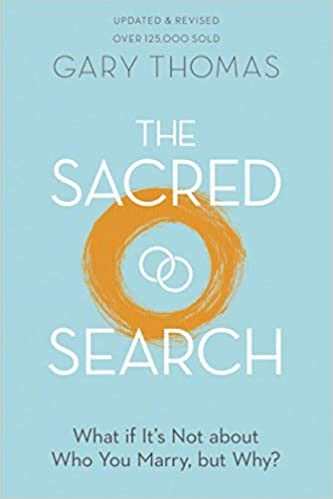
Gary Thomas’s The Sacred Search offers a needed reframing.
Instead of beginning with, “Who should I marry?” Thomas asks, “Why do you want to marry?” His central argument is simple but searching: a Christian should not seek marriage merely to escape loneliness, secure romance, gain social approval, or fulfill a personal dream. Marriage is best understood as a covenant in which two believers help one another love God, grow in holiness, and serve his purposes together.
That shift from who to why gives the book its lasting value.
This review contains an Amazon affiliate link. If you purchase The Sacred Search through the link below, I may earn a small commission at no additional cost to you.
Get The Sacred Search on Amazon
A Better Question Than “Who?”
Thomas challenges the popular idea of the “soul mate.” Rather than telling readers to find the one person who will complete them, he encourages the search for what he calls a “sole mate,” someone who can walk alongside them in a shared pursuit of Christ.
The wordplay may not persuade every reader, but the underlying point is sound. A spouse is not a savior. No human being can carry the weight of being another person’s ultimate source of joy, identity, security, healing, or purpose.
Only God can do that.
The pressure to find someone who will finally complete us often makes relationships fragile. When romance becomes the foundation, disappointment can feel like betrayal. When chemistry fades, as it inevitably does in every long relationship, a couple may conclude that something has gone wrong.
Thomas argues that a stronger foundation is shared spiritual purpose.
Jesus says:
“But seek first the kingdom of God and his righteousness, and all these things will be added to you.”
Matthew 6:33, ESV
This verse is not a formula guaranteeing marriage to anyone who pursues God faithfully. Jesus is teaching his followers to trust the Father rather than live anxiously over food, clothing, and tomorrow. Still, the principle applies: God’s kingdom must come before marriage, not after it.
A person who does not know how to seek God alone will struggle to seek God well with someone else.
Marriage is a gift, but it is not the goal of Christian life. Christ is.
Marriage for Holiness, Not Just Happiness
One of the book’s most familiar themes is its question: What if God designed marriage to make us holy more than to make us happy?target+1
This line can be misunderstood. Thomas is not saying that Christian marriage should be joyless, harsh, or merely a difficult spiritual exercise. Nor is he suggesting that spouses should remain in abusive, coercive, or destructive situations under the banner of holiness.
Marriage can and should include friendship, delight, sexual intimacy, laughter, companionship, and comfort. Scripture celebrates marital love. Proverbs rejoices in the wife of one’s youth (Proverbs 5:18–19). The Song of Solomon speaks openly and beautifully about desire. Jesus attended a wedding feast in Cana (John 2:1–11).
But happiness is too small to be the final purpose of marriage.
A relationship built only on personal fulfillment can collapse when it stops delivering constant emotional reward. Marriage inevitably exposes selfishness, pride, impatience, fear, and habits we could hide while single. A faithful spouse will see parts of us that others do not.
That exposure can become a gift.
Paul tells believers:
“Be kind to one another, tenderhearted, forgiving one another, as God in Christ forgave you.”
Ephesians 4:32, ESV
Marriage gives daily opportunities to practice this kind of love. It asks a husband and wife to forgive, tell the truth, serve, repent, remain faithful, and learn patience. It can become one of God’s means of shaping people into the likeness of Christ.
The purpose is not misery. The purpose is mature love.
The Importance of Character
Thomas’s practical counsel focuses on the things that truly sustain a marriage after initial attraction and excitement settle into ordinary life.
He urges readers to look beyond appearance, charm, compatibility in hobbies, or the rush of being “in love.” Those things are not unimportant, but they cannot carry a covenant by themselves.
The deeper questions are about character.
Does this person love Christ?
Do they take responsibility when they are wrong?
Can they receive correction?
Do they tell the truth?
Are they faithful in small things?
How do they treat people from whom they have nothing to gain?
How do they speak about former friends, family members, or past relationships?
Do they show self-control, humility, generosity, and emotional maturity?
These questions are deeply biblical.
Paul describes the fruit of the Spirit as “love, joy, peace, patience, kindness, goodness, faithfulness, gentleness, self-control” (Galatians 5:22–23, ESV). No one exhibits these qualities perfectly. The question is not whether a potential spouse has arrived spiritually. The question is whether they are genuinely growing.
A wise person does not marry potential alone. They pay attention to patterns.
For example, a dating couple may enjoy deep conversations about theology, share favorite worship music, and feel intense attraction. But if one person routinely lies, belittles others, spends irresponsibly, refuses accountability, pressures the other sexually, or becomes controlling when disappointed, those patterns matter more than chemistry.
Love should not make us blind. It should make us truthful.
Shared Faith and Shared Mission
The book repeatedly returns to the importance of shared spiritual direction.
A Christian marriage is not simply two people who both happen to identify as Christians. It is two people learning to order their shared life around Jesus.
This includes important questions:
Do we agree on the central truths of the Christian faith?
Do we belong to and serve a local church?
How do we understand money, generosity, work, children, hospitality, sexuality, forgiveness, and conflict?
What will faithfulness to Christ require of us when it costs us something?
Can we pray together, worship together, and encourage one another toward holiness?
Are we prepared to shape a home around the kingdom of God rather than around comfort, image, or ambition?
Paul asks, “Do two walk together, unless they have agreed to meet?” (Amos 3:3, ESV). The verse is not a dating manual, but it captures an important reality. A lifelong covenant needs more than a shared attraction. It needs shared direction.
This does not require two people to have identical personalities, backgrounds, interests, or ministry gifts. A quiet person can marry an outgoing person. An artist can marry an engineer. A person from one culture can marry someone from another. Differences can enrich a marriage.
But the couple must know where they are going together.
Dating With Wisdom Rather Than Fear
One of the strongest aspects of The Sacred Search is its effort to replace anxiety with wisdom.
Thomas rejects the idea that a Christian must discover one hidden soulmate through flawless spiritual intuition. His argument is that several people might be capable of becoming a faithful and wise marriage partner, provided that the relationship is rooted in shared faith, sound character, maturity, and a genuine willingness to build a life around Christ.garythomas+1
That does not make the choice casual. Marriage is weighty. It should involve prayer, counsel, time, honest conversation, and attention to reality.
Proverbs says:
“Without counsel plans fail, but with many advisers they succeed.”
Proverbs 15:22, ESV
A healthy dating relationship should not exist in total secrecy or isolation. Trusted pastors, mature friends, family members, and older married believers can sometimes see warning signs, strengths, or blind spots that a couple cannot see on their own.
This is not an invitation for others to control someone’s decision. It is an invitation to humility.
A wise person asks, “What are people who love me seeing that I may not see?”
A Necessary Word About Safety
Any Christian book about marriage and dating should be read with clear pastoral boundaries.
No one should be encouraged to date, marry, or remain with someone who is abusive, coercive, threatening, sexually manipulative, violent, or controlling. Abuse is not a spiritual growth opportunity. It is a serious sin and a safety issue.
A person does not prove faithfulness by staying in danger.
Likewise, forgiveness does not mean ignoring abuse, withdrawing legal protection, abandoning wise boundaries, or refusing help. Churches and leaders must take reports of abuse seriously, prioritize safety, and connect people with competent professional support.
Thomas’s broader emphasis on character and wisdom supports this concern. A person’s treatment of others, response to boundaries, and willingness to repent are not minor details. They reveal whether a relationship is safe enough for covenant.
Who Should Read It?
The Sacred Search is written primarily for single adults who hope to marry, but it can also help dating couples, engaged couples, pastors, parents, and mentors.
It is especially useful for readers who feel trapped by the pressure to find “the one,” confused by popular dating culture, or tempted to make romance the center of life.
The book does not offer a checklist that will guarantee a perfect spouse or effortless marriage. No book can do that. But it provides a better set of questions.
Instead of asking only, “Do I feel strongly about this person?”
Thomas teaches readers to ask:
“Can we seek Christ together?”
“Does this relationship make it easier or harder to obey God?”
“Are we building on character or merely attraction?”
“Do we want marriage for the right reasons?”
Those are not less romantic questions. They are more enduring ones.
Verdict
The Sacred Search is a thoughtful, practical, and needed corrective to the anxiety-driven search for a perfect soulmate. Gary Thomas calls Christian singles to seek a marriage centered on shared faith, mature character, wise counsel, and a common pursuit of God’s kingdom.
Its central message is worth hearing: before asking whom to marry, ask why you want to marry.
Marriage is not meant to replace God, rescue us from every loneliness, or guarantee perpetual happiness. At its best, it is a covenant of friendship and faithfulness in which two people help one another become more like Christ.
Recommended for Christian singles, dating and engaged couples, parents, pastors, and mentors who want to approach marriage with more wisdom, freedom, and spiritual purpose.
~ Sunny