

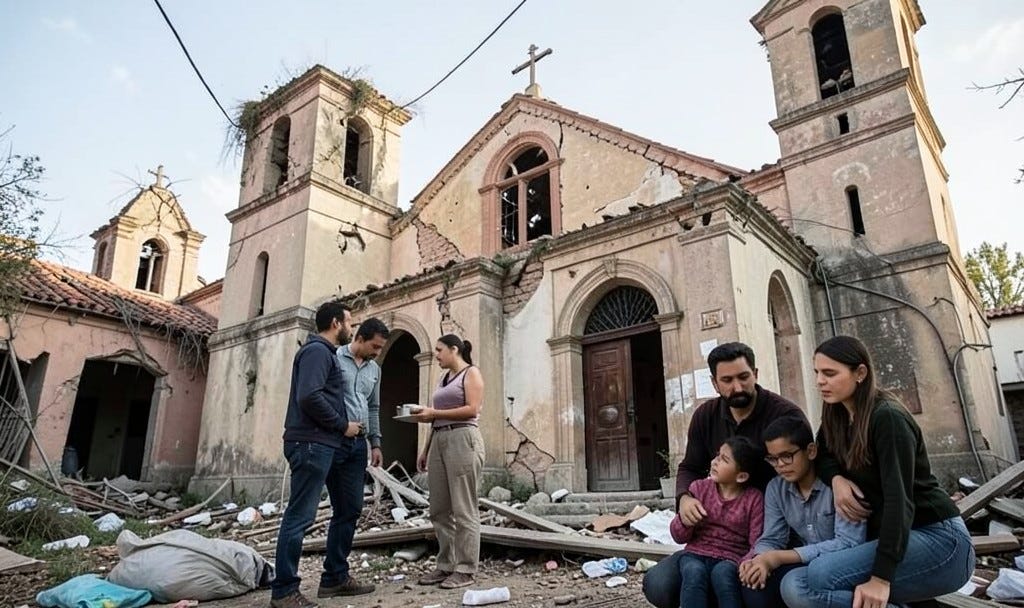
A photograph stops us mid-scroll. A damaged church. A grieving family. A believer imprisoned for following Jesus.
We feel sorrow, perhaps anger. We share the story, add a prayer, and move on.
But the people in that photograph cannot move on so easily. Their lives continue after our attention shifts. They have children to raise, decisions to make, congregations to nurture, and grief that cannot be resolved by someone else’s moment of concern.
The question is not whether Christians should tell stories of persecution. Silence can leave suffering people forgotten. The question is whether our telling serves the people involved—or turns their pain into material for our own platforms.
International Christian Concern is marking the International Day of Prayer for the Persecuted on November 1, with a 2026 planning guide, prayer cards, and church resources. This offers congregations a meaningful starting point. It should not become the finishing line.
Remember, people, not merely stories
Hebrews gives the church an instruction that reaches deeper than awareness:
“Remember those who are in prison, as though in prison with them, and those who are mistreated, since you also are in the body.”
—Hebrews 13:3, ESV
“As though in prison with them” leaves little room for distant spectatorship. It calls us to identify with people whose circumstances may differ profoundly from our own.
That identification must preserve their humanity. A persecuted Christian is not merely an example of courage, evidence in a political argument, or the emotional climax of a sermon.
This person may be exhausted, uncertain, funny, impatient, hopeful, or afraid. Faithfulness does not erase personality. Suffering does not turn someone into a symbol.
We honor our brothers and sisters when we remember that their lives belong to God—not to our storytelling needs.
Pray specifically without demanding exposure
Specific prayer does not require publishing every identifying detail.
A congregation can pray for a detained believer’s access to legal counsel, a displaced family’s housing, a pastor’s wisdom, or children’s emotional well-being without naming a village or circulating a photograph.
Begin with requests that affected Christians or trusted partners have made available for sharing. Ask what they want prayer for rather than assuming we already know.
Pray for safety and release. Pray also for provision, wise decisions, rest, steadfast faith, and freedom from bitterness. Pray for those responsible for mistreatment to repent and cease doing harm.
Avoid prescribing a dramatic outcome. We can ask God boldly for deliverance without suggesting that continued hardship reveals deficient faith.
And when details cannot safely be shared, accept that limitation. God does not need information that a church bulletin should not contain.
Before sharing, slow down
A compelling story deserves careful handling precisely because it concerns real people.
Before putting it in a sermon, newsletter, or social post, ask:
Is it verified? Trace the account to its original source. Check the date and whether later reporting changes the picture. Repetition is not independent confirmation.
What is established? Distinguish documented events from allegations or interpretation. Do not label every hardship persecution without examining the evidence.
Is sharing appropriate? Ask whether the person or a trusted representative has approved the intended use. Permission to tell a story privately is not permission to broadcast it.
What action does this invite? Give readers a responsible way to pray, help, or learn—not merely a reason to feel outraged.
Do not embellish details to make an appeal more powerful. Do not identify people whom the original source deliberately protects. Where consent or safety is unclear, consult the originating organization before republishing.
If you discover an error, correct it visibly.
Truthfulness is not an obstacle to solidarity. It is part of it.
They are not only recipients
Paul describes the church as a body:
“If one member suffers, all suffer together; if one member is honored, all rejoice together.”
—1 Corinthians 12:26, ESV
Notice both movements: suffering together and rejoicing together. Fellowship becomes distorted when we recognize another church’s pain but overlook its gifts.
Paul’s account of the Macedonian churches challenges that imbalance:
“We want you to know, brothers, about the grace of God that has been given among the churches of Macedonia, for in a severe test of affliction, their abundance of joy and their extreme poverty have overflowed in a wealth of generosity on their part. For they gave according to their means, as I can testify, and beyond their means, of their own accord, begging us earnestly for the favor of taking part in the relief of the saints—and this, not as we expected, but they gave themselves first to the Lord and then by the will of God to us.”
—2 Corinthians 8:1–5, ESV
These believers experienced affliction and poverty, yet they exercised initiative and generosity. They were participants in ministry, not simply its beneficiaries.
That does not make deprivation desirable. Nor should the passage become a fundraising tool for pressuring struggling people to give beyond their capacity.
It does challenge the assumption that resources flow in only one direction. A church with fewer material protections may still have wisdom another congregation desperately needs.
Make room for their voice
For November’s observance, consider inviting a Christian leader with firsthand experience of religious pressure into a conversation—where participation is safe and freely chosen.
Do not require a public appearance, recording, or traumatic testimony. Agree beforehand on topics, identifying details, and what may be published. Offer an appropriate honorarium without making dramatic disclosure its price.
Ask about ordinary church life as well as hardship:
What is bringing your congregation joy?
How do you nurture prayer and prepare leaders?
What have you learned about reconciliation?
What do outsiders misunderstand?
What would a helpful partnership look like to you?
Let the guest decline questions and challenge assumptions. Listen for what your church needs to receive, not only what it can give.
Do not romanticize suffering. People should not have to remain endangered to qualify as spiritually instructive.
Stay after the designated Sunday
A prayer observance can awaken concern. Sustained fellowship requires a plan.
Choose a trusted partner. Ask about priorities and financial accountability. Establish a recurring prayer rhythm. Consider ongoing support that follows locally identified needs rather than the most marketable story.
Assign someone to maintain contact and bring appropriate updates to the congregation. Ask what help remains useful when circumstances change.
Measure faithfulness by more than views, shares, or the emotional intensity of a service. Ask whether your church has become more dependable, more teachable, and more willing to serve without recognition.
The word we need is solidarity: not speaking over people, but standing alongside them.
The persecuted church does not exist to make comfortable Christians feel grateful, guilty, or inspired. These believers are our brothers and sisters.
We owe them prayer and practical love. We also owe them the humility to discover what God may teach us through their lives.
~ Sunny
All Scripture quotations are from the Holy Bible, English Standard Version (ESV).