

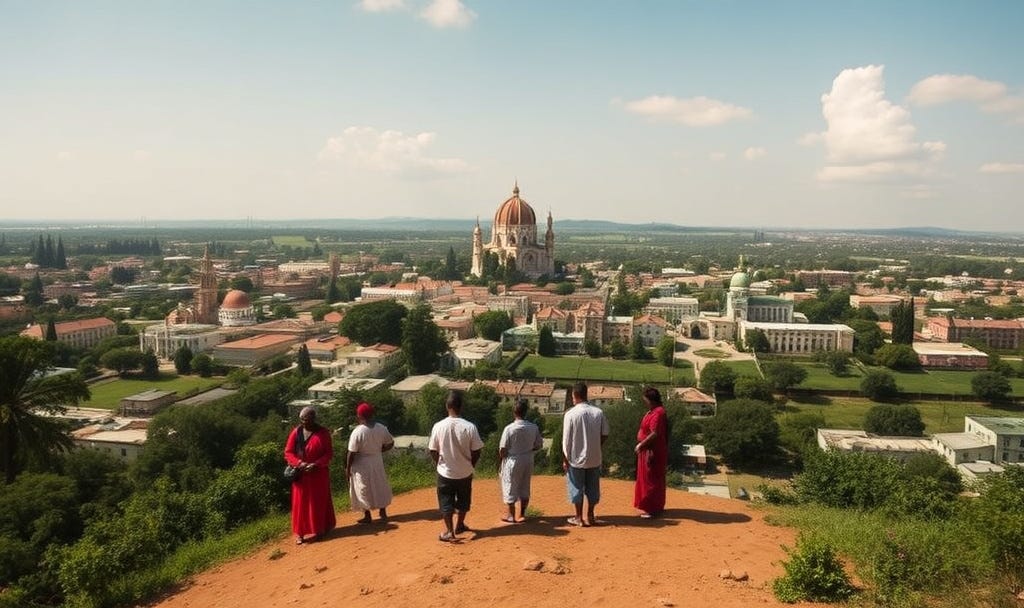
If you want to know where the Christian faith is most alive today, you will not find the answer in the places that once assumed they owned it. The numbers tell a story the West has been slow to absorb: the typical Christian in the world today is not a European or an American but a Korean, a Nigerian, a Brazilian, a Filipino, a believer in the global South where the church is young, growing, and on fire. The center of gravity has moved, and most in the old centers have not yet noticed that their seat is no longer at the head of the table.
This is not a small statistical footnote. It is one of the great untold stories of our age. Within living memory, the West sent missionaries out to the ends of the earth, often tangled up with empire and condescension, and the gospel did what the gospel does — it outgrew the hands that carried it. The seed took root and the harvest now dwarfs the field it came from, most of the European nations, as it is clearly evident now. The sent church has become the sending church. The students have become the teachers, and the wise will sit down and learn from them.
What is there to learn? A great deal, and it is humbling. From the African church, a confidence in the reality of the Spirit and the nearness of God that a managed, disenchanted faith has nearly lost. From the persecuted church across Asia and the Middle East, a costly seriousness about discipleship that makes consumer Christianity look like a hobby. From the Latin American church, a gospel that refuses to ignore the poor. From all of them, a joy in worship and a hunger for Scripture that no decline statistic can dampen.
I think often of the missionary movement’s quiet reversal. Today it is increasingly Korean and Nigerian and Brazilian believers who are crossing oceans to plant churches in the spiritually exhausted cities of Europe and North America. They come to re-evangelize the lands that first sent the message, and they come without bitterness, only with a burden. There is a beautiful humility in receiving the gospel back from those to whom once it was given, and it is exactly the humility the Western church most needs.
None of this is to romanticize. The global South church has its own struggles, the prosperity gospel, syncretism, the growing pains of explosive growth, the strain of training leaders fast enough to keep up. It is not a paradise. It is simply the church, alive, with the particular gifts and dangers of its place, the same way the West has. The point is not to idealize them but to end our long habit of ignoring them.
So on these rounds, I keep turning my eyes south and east, away from the anxious headlines about Western decline. The body of Christ is not shrinking. It is relocating, and flourishing, in places we were trained not to look. The center of gravity has moved. The faithful response is not to mourn that the West is no longer the center. It is to rejoice that the gospel was always too big to be contained by it and to learn, at last, from the church once presumed to be taught.
~ Sunny