

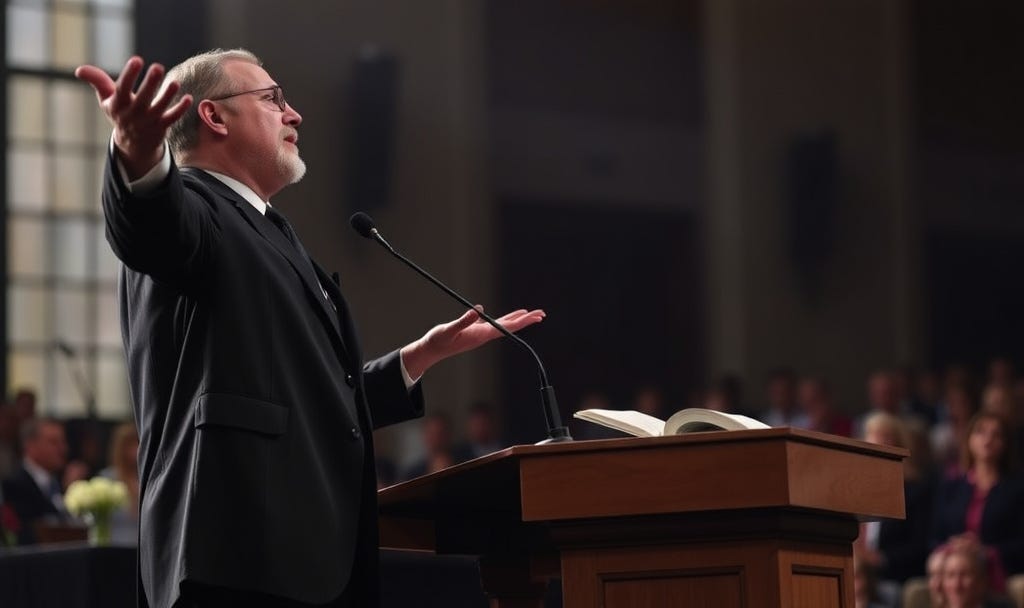
Somewhere along the way we began to evaluate sermons the way we evaluate everything else, by performance. Was it engaging, was it polished, did it move the room, would it work as a clip? These are not worthless questions, but they are the wrong first ones, and asking them first slowly deforms the preacher into a performer and the congregation into an audience. The New Testament word that sits underneath preaching is closer to herald than to artist. A herald does not invent the message or improve it; he carries it, and his only real virtue is faithfulness to what he was given.
This is why Paul can say he resolved to know nothing among the Corinthians except Christ crucified, and that he came not with eloquence but in weakness and fear and much trembling. He is not despising skill. He is refusing to let the gospel’s power be relocated into his own charisma. The danger of the gifted preacher is precisely that he can succeed, that he can fill a room and stir a feeling and send people home impressed with him, and call it ministry. The herald’s question is not whether the crowd was moved but whether the message arrived intact.
Preaching, then, is a handing-over. The preacher receives a word he did not author and passes it on, and the act is closer to a steward delivering a letter than to a speaker delivering a talk. This reframes the whole labor of the study. The hours in the text are not preparation for a performance; they are the discipline of listening hard enough that you have something true to hand over, rather than something clever to display.
It also reframes the listener. If preaching is heralding, then hearing is not consuming, and the test of a sermon is not how it felt on Sunday but what it does by Thursday. The question for both pulpit and pew is the same and it is old: did the word of God get handed over, received, and obeyed? Everything else, including eloquence, is at best a servant of that and at worst a substitute for it.
—Sunny