

Blessed Are the Peacemakers
What it means to keep seeking peace when a war will not end quickly
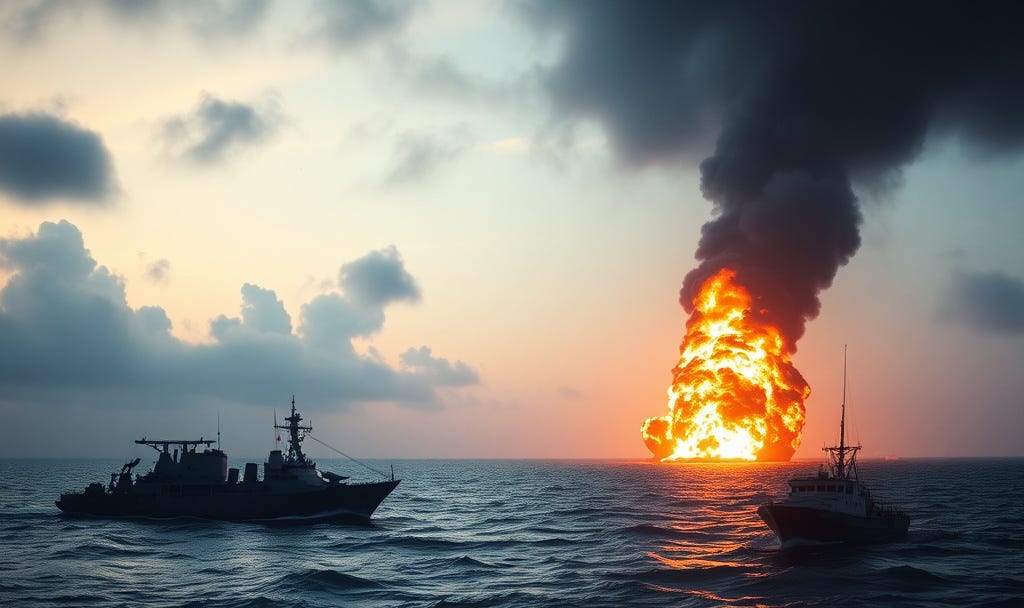
The conflict involving the United States and Iran has now lasted for months, with fighting, disruption to shipping through the Strait of Hormuz, reports of depleted weapons stocks, and negotiations that repeatedly appear near a breakthrough before stalling again. Recent reporting describes indirect messages passing through intermediaries and continuing negotiations over conditions for shipping through the Strait, but the terms, timing, and durability of any agreement remain uncertain.
This is what protracted conflict feels like from the inside.
It is rarely one decisive event. It is not a clean line from crisis to resolution. It is an exhausting cycle of escalation and restraint, hopeful statements and disappointed expectations, military calculations and humanitarian consequences, difficult demands and partial concessions.
One week, officials say an agreement is close. The next week, new conditions emerge. One party describes progress; another denies that real talks are taking place. The word close begins to lose its force because people have heard it too often.
For those living near the consequences of war, this uncertainty is not a policy problem to debate at a distance. It is daily life. It means worried families, disrupted work, rising costs, fear for loved ones, interrupted travel, fragile communities, and the knowledge that a decision made far away can alter the course of an ordinary day.
For those of us watching from relative safety, the temptation is different. We can let a long conflict become wallpaper. It becomes one more recurring headline between weather, sports, markets, and political argument.
Scripture calls us to resist both numbness and despair.
It calls us to tell the truth about evil and suffering. It calls us to pray for leaders and peoples. It calls us to pursue peace without pretending peace is easy. And it calls us to bless those who continue the slow, difficult work of making peace possible.
A War That Refuses a Tidy Ending
We often imagine wars ending with one dramatic moment.
A treaty is signed. A leader gives a speech. A ceasefire begins. Soldiers return home. The headlines change.
Sometimes history does contain such moments. But even then, the public moment is usually the visible end of countless unseen conversations, failed proposals, private concessions, intermediaries, security guarantees, humanitarian arrangements, and difficult decisions.
Most conflicts do not move in a straight line toward peace.
They move more like a person trying to cross a flooded river on stepping stones. A negotiator makes progress, then finds the next step unstable. A tentative understanding is reached, then challenged by events on the ground. Trust is offered, then tested. One party fears appearing weak. Another fears being deceived. Both carry memories of past promises that did not hold.
The current efforts surrounding the Strait of Hormuz show this kind of fragile complexity. Reports indicate that Iranian and Omani negotiators have worked on frameworks for commercial shipping, including questions about safe routes and control of passage. Yet the wider conflict, the status of blockades, sanctions, security demands, and competing political claims make any agreement difficult to finalize and even harder to sustain.
This does not mean diplomacy is pointless.
It means diplomacy is demanding.
It means peace often arrives slowly, imperfectly, and through work that most people will never see.
What Jesus Meant by Peacemakers
Jesus said:
“Blessed are the peacemakers, for they shall be called sons of God.”
Matthew 5:9
This is one of the most familiar lines in the Sermon on the Mount. It is also one of the easiest to reduce to sentiment.
Jesus did not say, “Blessed are those who enjoy peace and quiet.”
He did not say, “Blessed are those who avoid all disagreement.”
He did not say, “Blessed are those who pretend conflict does not exist.”
He said, “Blessed are the peacemakers.”
A peacemaker is not simply peaceful in temperament. A peacemaker does the costly work of moving toward reconciliation, truth, restraint, justice, repair, and restored relationship.
That work is difficult in a family conflict. It is difficult in a church disagreement. It is difficult in a divided community.
How much more difficult is it in a war shaped by national security, military action, disputed facts, historic grievances, political pressure, regional alliances, economic interests, and the fear that compromise may invite further danger?
Peacemaking is not naïve optimism.
It does not require people to deny real threats or overlook real wrongs. It does not mean calling evil good, ignoring injustice, or asking victims to carry the burden of reconciliation alone. Scripture is clear that peace and truth belong together.
The psalmist writes:
“Steadfast love and faithfulness meet;
righteousness and peace kiss each other.”
Psalm 85:10
Biblical peace is not a shallow calm created by hiding wounds. It is the hard-won fruit of truth, justice, mercy, repentance, and faithful repair.
That is why peace can take time.
Peace Is More Than the Absence of Fighting
The Bible’s vision of peace is larger than a ceasefire.
The Hebrew word shalom includes safety, wholeness, wellbeing, reconciliation, justice, and right relationship. It is not simply the silence of guns. It is the restoration of life as God intends it.
The prophet Isaiah describes the coming reign of God this way:
“Of the increase of his government and of peace there will be no end.”
Isaiah 9:7
The promise is not merely that battles will stop. It is that God’s kingdom will bring enduring righteousness.
Isaiah also gives this remarkable image:
“The wolf shall dwell with the lamb,
and the leopard shall lie down with the young goat.”
Isaiah 11:6
The image is poetic, but its meaning is clear. God’s final peace reaches into places of fear, violence, and predation. Those who once threatened one another are no longer trapped in hostility.
We do not yet live in that world.
We still live in a world of wars and rumors of wars. Jesus himself warned that such things would occur:
“You will hear of wars and rumors of wars. See that you are not alarmed, for this must take place.”
Matthew 24:6
Jesus does not tell his followers that war is good. He does not ask them to become indifferent. He tells them not to be ruled by panic, because the conflict of nations does not remove God from his throne.
The Christian hope is not that human beings will finally establish perfect peace through superior diplomacy or military strength. The Christian hope is that Christ will make all things new.
Yet that future hope does not excuse passivity in the present. It makes peacemaking more urgent.
Because peace belongs to God’s future, Christians should seek signs of that peace now.
God’s Judgment on Violence
Scripture is not casual about war.
It records wars honestly, including the fear, bloodshed, grief, and moral complexity surrounding them. Yet it does not glorify violence as though it were a normal or desirable human condition.
The psalmist says:
“The Lord examines the righteous,
but the wicked, the one who loves violence, his soul hates.”
Psalm 11:5
The prophet Habakkuk cries out over a society filled with violence:
“Destruction and violence are before me;
strife and contention arise.”
Habakkuk 1:3
His prayer sounds contemporary because violence always produces more than physical harm. It breaks trust. It displaces families. It turns ordinary routines into sources of danger. It creates grief that passes from one generation to another.
The prophet Micah gives one of Scripture’s clearest visions of peace:
“He shall judge between many peoples,
and shall decide disputes for strong nations far away;
and they shall beat their swords into plowshares,
and their spears into pruning hooks;
nation shall not lift up sword against nation,
neither shall they learn war anymore.”
Micah 4:3
A sword becomes a plowshare.
An instrument designed to wound becomes an instrument that cultivates life.
This is not merely a beautiful metaphor. It reveals God’s intention for the world. Human skill, material resources, and national strength are not meant finally for destruction. They are meant to serve life.
The Work Few People See
When a conflict stretches on, public attention often focuses on leaders, military operations, public statements, and dramatic moments. But peace is often pursued by people whose names never reach the headlines.
There are diplomats who spend long days clarifying language in proposed agreements.
There are translators who make sure one phrase does not create a misunderstanding.
There are civil servants who study shipping routes, humanitarian access, economic effects, and security risks.
There are mediators who carry messages between parties that refuse to speak directly.
There are aid workers who remain near vulnerable communities.
There are local religious leaders, teachers, doctors, parents, journalists, and neighbors who try to prevent fear from becoming hatred.
There are people who continue showing up after the eleventh failed round of talks because the twelfth conversation may open a door.
This work is unglamorous.
It rarely produces a viral moment.
It may look like waiting, revising, listening, checking facts, lowering rhetoric, making one phone call, returning to the table, or refusing to let a fragile line of communication collapse.
But this is often what peacemaking looks like.
Proverbs says:
“For by wise guidance you can wage your war,
and in abundance of counselors there is victory.”
Proverbs 24:6
This verse does not celebrate war. It acknowledges the need for wisdom in a dangerous world. It also reminds us that wise counsel matters. Decisions involving conflict and peace should not be left to pride, impulse, or the desire for public applause.
James gives a deeper description of godly wisdom:
“The wisdom from above is first pure, then peaceable, gentle, open to reason, full of mercy and good fruits, impartial and sincere.”
James 3:17
This is a searching standard.
Is a proposed action open to reason?
Does it seek truth?
Does it make room for mercy?
Is it sincere, or merely rhetorical?
Does it reduce unnecessary suffering?
Does it protect the vulnerable?
Does it resist the pride that treats human lives as pieces on a board?
These are not simple questions. But they are Christian questions.
Why Peace Talks Often Feel So Fragile
People sometimes become cynical when peace talks fail. They ask, “Why keep talking if nothing changes?”
The answer is that alternatives are often worse.
A conversation can feel weak compared with military action because it is slow and uncertain. But the slow work of dialogue may be the very thing preventing greater loss of life. Even a partial agreement, a temporary humanitarian corridor, a safe passage for ships, a prisoner exchange, or a renewed channel of communication can matter.
Think of a doctor trying to stabilize a patient after a severe injury.
The doctor may not be able to heal every wound immediately. There may be complications, setbacks, and long-term damage. But stopping the bleeding, restoring breathing, preventing infection, and keeping the patient alive are not small achievements.
In the same way, diplomacy may not produce complete peace at once. But reducing escalation, creating space for aid, protecting civilians, reopening a route, preventing a misunderstanding, or preserving contact between enemies can save lives and make later reconciliation more possible.
Scripture urges us not to despise small beginnings:
“For whoever has despised the day of small things shall rejoice.”
Zechariah 4:10
A small step toward peace is not the kingdom of God in its fullness. But it may be a faithful sign of that kingdom.
The Temptation of Numbness
For people watching from comfortable distance, the danger is not only fear. It is fatigue.
At first, a war feels urgent. We read every update. We talk about it constantly. We pray with intensity.
Then days become weeks. Weeks become months. The conflict remains unresolved. The details are complicated. Other news takes over. Our attention shifts.
This is understandable. Human beings have limits. We cannot carry every grief in the world at full emotional intensity every hour of the day.
But there is a difference between accepting our limits and abandoning concern.
Numbness says, “This has gone on too long for me to care.”
Christian compassion says, “I cannot carry everything, but I will not let repeated suffering become invisible.”
Paul instructs believers:
“Rejoice with those who rejoice, weep with those who weep.”
Romans 12:15
To weep with those who weep does not require us to know every policy detail. It requires us to remember that behind every report are image-bearers: children, parents, elderly people, workers, students, and communities who bear the weight of decisions they did not make.
Jesus himself was moved with compassion when he saw suffering. At the tomb of Lazarus, “Jesus wept” (John 11:35). He knew he would raise Lazarus. He knew death would not have the final word. Yet he still entered the grief of those who mourned.
Hope does not make compassion unnecessary.
Hope makes compassion possible.
The Temptation of Despair
The opposite temptation is despair.
After enough failed talks and renewed violence, people may conclude that peace is impossible. They may assume that history only repeats itself, that leaders cannot be trusted, that hostility is permanent, and that prayer changes nothing.
But Christian hope is not optimism about human beings.
It is confidence in God.
The prophet Jeremiah wrote to people living in exile, far from home and tempted to despair. He did not promise them a quick escape. Instead, he told them:
“Seek the welfare of the city where I have sent you into exile, and pray to the Lord on its behalf.”
Jeremiah 29:7
The people of God were called to seek the welfare, or shalom, of a place that represented their loss and displacement.
That is difficult faithfulness.
It means praying for peace even when we do not control the outcome.
It means seeking the good of people we may not understand.
It means refusing to surrender the future to cynicism.
Paul writes:
“Do not be overcome by evil, but overcome evil with good.”
Romans 12:21
This does not mean evil is easily overcome. It does not mean that victims must simply absorb harm or that nations should ignore genuine threats. It means Christians must not allow evil to dictate the shape of their own hearts.
We must not become what we oppose.
Prayer That Outlasts the Headline
Prayer is one of the clearest ways Christians can resist both numbness and despair.
Prayer does not replace diplomacy, wise policy, truthful reporting, humanitarian care, or practical efforts to protect life. It is not an excuse for inaction.
But prayer is not nothing.
Prayer acknowledges that leaders are not sovereign, military strength is not ultimate, and history is not finally controlled by the loudest voices in the room.
Paul urges:
“First of all, then, I urge that supplications, prayers, intercessions, and thanksgivings be made for all people, for kings and all who are in high positions.”
1 Timothy 2:1–2
The purpose is clear:
“That we may lead a peaceful and quiet life, godly and dignified in every way.”
1 Timothy 2:2
Notice that Paul calls Christians to pray for rulers, not only rulers they admire.
Prayer refuses the easy division between people who deserve concern and people who do not. It asks God to give leaders wisdom, restraint, courage, truthfulness, and a desire for peace.
A simple prayer may sound like this:
Lord, have mercy on all who are living with fear, loss, and displacement because of this conflict. Protect civilians and those most vulnerable to violence. Give wisdom and restraint to leaders and military decision-makers. Strengthen negotiators, mediators, and all who seek a just and durable peace. Expose lies, restrain hatred, and make a way where no way seems visible. In Christ’s name, amen.
This is not a weak prayer.
It is a way of keeping our hearts awake.
The Christian Duty to Speak Carefully
In a conflict marked by competing narratives, propaganda, partial information, and strong emotion, Christians should be especially careful with words.
Scripture says:
“The one who states his case first seems right,
until the other comes and examines him.”
Proverbs 18:17
This is a needed warning in every age of instant reaction.
We should resist sharing unverified claims simply because they support a view we already hold. We should avoid treating suffering as a tool for scoring political points. We should refuse dehumanizing language about entire peoples, nations, religions, or ethnic groups.
James writes:
“Let every person be quick to hear, slow to speak, slow to anger.”
James 1:19
Being slow to speak does not mean being silent about injustice. It means refusing careless certainty. It means listening before repeating. It means recognizing that complicated conflicts cannot be explained honestly through slogans alone.
The ninth commandment still matters in wartime:
“You shall not bear false witness against your neighbor.”
Exodus 20:16
Truthfulness is part of peacemaking.
Falsehood can inflame fear.
Exaggeration can harden hatred.
Dehumanizing speech can prepare the way for real harm.
Christians must speak of every human life with the dignity that belongs to those made in God’s image.
Peace Begins Closer Than We Think
The situation between nations can make ordinary people feel powerless. We cannot draft agreements, direct military policy, or control the decisions of governments.
But peacemaking does not begin only in conference rooms.
It begins in homes, churches, workplaces, neighborhoods, and online conversations.
It begins when we refuse to mock those with whom we disagree.
It begins when we listen before assuming motives.
It begins when we confess our own contribution to division.
It begins when we pray for those we are tempted to despise.
It begins when we resist the pleasure of outrage.
It begins when we choose truthful speech over tribal slogans.
Jesus says:
“If possible, so far as it depends on you, live peaceably with all.”
Romans 12:18
Paul does not say peace is always possible. Some conflicts remain unresolved because reconciliation requires more than one willing person. Some situations require boundaries, accountability, protection, and justice.
But “so far as it depends on you” is a serious calling.
You may not be able to end a war.
But you can refuse to feed contempt.
You may not be able to control national rhetoric.
But you can speak about people with dignity.
You may not be able to solve a geopolitical conflict.
But you can keep praying when the news moves on.
You can remain human in a time when anger is rewarded.
The Peace Christ Gives
The deepest Christian claim is that peace is finally found in a person.
Isaiah calls the promised Messiah “Prince of Peace” (Isaiah 9:6). Jesus does not bring peace as a public relations strategy or an abstract ideal. He makes peace through his own self-giving love.
Paul writes:
“For he himself is our peace.”
Ephesians 2:14
Christ makes peace between Jew and Gentile, breaking down “the dividing wall of hostility” (Ephesians 2:14). He also makes peace between sinners and God:
“Therefore, since we have been justified by faith, we have peace with God through our Lord Jesus Christ.”
Romans 5:1
At the cross, Jesus confronts the deepest roots of hostility: sin, pride, fear, hatred, guilt, and death.
This does not mean every political conflict has a simple religious answer. It does mean that no lasting human peace will finally be secured without transformed hearts.
Jesus tells his disciples:
“Peace I leave with you; my peace I give to you. Not as the world gives do I give to you.”
John 14:27
The world’s peace is often fragile. It can depend on power, deterrence, economic arrangements, and the temporary restraint of rival interests. Such measures may be necessary in a fallen world, but they cannot heal the human heart.
Christ gives a deeper peace, one that begins with reconciliation to God and forms people capable of mercy, truth, courage, justice, and love.
Keep Showing Up to the Table
There is no tidy ending available to this conflict today.
The situation may improve. It may deteriorate. Negotiations may produce an agreement, or they may fail again. Public reports remain uncertain, and the human cost of continued instability is real.
But uncertainty does not make peace work meaningless.
It makes it more necessary.
Blessed are the peacemakers.
Blessed are those who return to the table after disappointment.
Blessed are the translators, mediators, diplomats, civil servants, aid workers, and local leaders who keep choosing patience over escalation.
Blessed are the people who resist the easy thrill of outrage.
Blessed are those who pray after the headlines have faded.
Blessed are those who tell the truth without feeding hatred.
Blessed are those who remember that every casualty, every displaced family, every frightened child, and every grieving parent bears the image of God.
Peacemaking is harder than wishing for peace.
It is harder than posting about peace.
It is harder than hoping vaguely that things will improve.
It means showing up again, listening again, praying again, and refusing to let disappointment become indifference.
That work may not look dramatic.
But in a world weary with conflict, it is holy work.
~ Sunny