

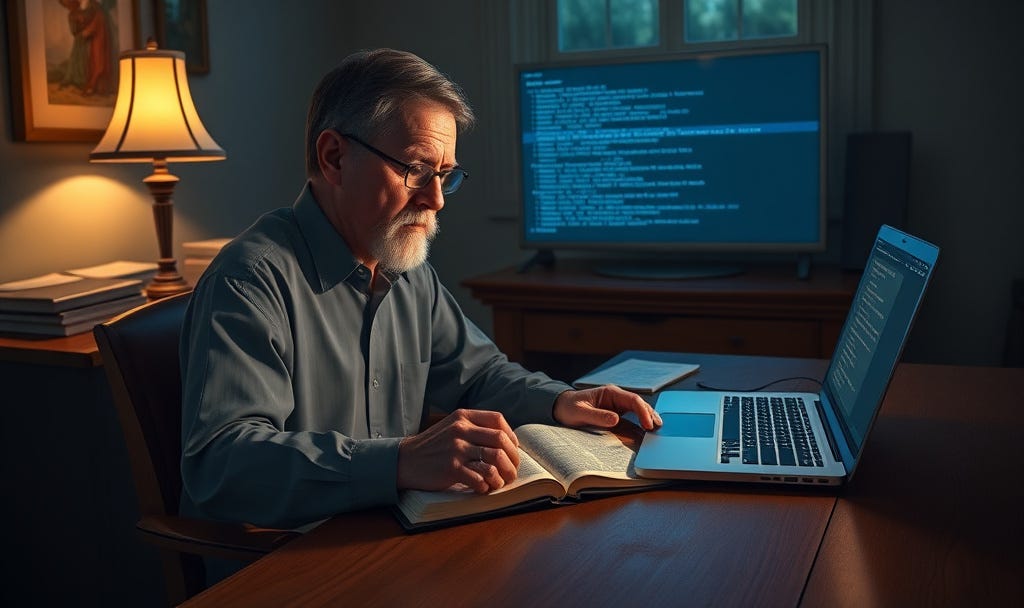
In the span of a few short years, we have handed our questions to a machine that answers in our own voice. It writes our emails, drafts our sermons, comforts the lonely at three in the morning, and increasingly tells us what to think before we have finished thinking it. The technology is dazzling. The question for the church is not whether it is impressive but what it is doing to us while we are impressed.
We are at a threshold, and thresholds are precisely where you must decide what you will carry across and what you will leave behind. The temptation will be to treat artificial intelligence as merely a tool, neutral as a hammer. But no technology is neutral in its effects. Each one trains us, rewards certain habits, and quietly reshapes what we believe a human being is for. A people formed by frictionless answers may slowly forget how to sit with hard questions, and the life of faith is mostly hard questions sat with over a long time.
There are real gifts here, and pretending otherwise is its own kind of unfaithfulness. The pastor in a remote place now has access to libraries he could never afford. The Scriptures can be translated faster than ever into languages that have waited centuries. Used wisely, these are servants. The danger is never the servant. The danger is the moment the servant becomes the master and we no longer notice the transfer of authority.
So let me name the deeper risk plainly. The machine can produce the words of prayer but cannot pray. It can generate a sermon but cannot be broken over a text at midnight. It can simulate counsel but cannot weep with those who weep. The things that matter most in ministry are the things it cannot do: presence, suffering, love that costs something. If we outsource the outputs and lose the formation that used to come from producing them, we will have traded our souls for our efficiency.
The church has crossed thresholds like this before. The printing press, the radio, the screen, each promised reach and exacted a hidden price. We are not the first generation to be handed a powerful new thing and asked what we will let it make of us. The faithful response was never refusal and never surrender. It was discernment: receiving the gift, naming the cost, and refusing to let the tool redefine the human.
Here is the work in front of us. To keep praying with our own halting words. To keep showing up in person where a machine cannot follow. To form people who can think slowly, love patiently, and tell the truth even when an algorithm offers an easier answer. The machine learned to talk. Our task is to remain the kind of people who still have something worth saying.
~ Sunny